Ancient Salamis, a Gothic abbey, Venetian walls and three castles in the mountains — what to see and why it still stands.
Few places in the Mediterranean let you walk through nine thousand years of history in a single day. In North Cyprus the ancient columns, a Gothic abbey, Venetian walls and Ottoman mosques often stand only a few dozen kilometres apart. The island sat at the crossroads between Europe, Asia and Africa, and everyone who passed through - trader, monk or soldier - left something behind. What follows keeps to chronological order, so it also reads as an itinerary for a few days.
The oldest traces: the copper that named the island
The first permanent settlements on Cyprus appeared around 7000 BC. Neolithic farmers built round stone houses and kept animals they had ferried across from the mainland. The island's real wealth, though, lay underground: copper. Mined here since the Bronze Age and exported across the eastern Mediterranean in such quantities that the Latin word for copper, cuprum, derives from the island's own name. The harbours then passed in turn to Phoenicians, Assyrians and Persians, until Alexander the Great took the island in 333 BC. After him came the Ptolemies from Egypt and finally the Romans - and with them roads, aqueducts and cities.
Salamis - the city that used to be the capital
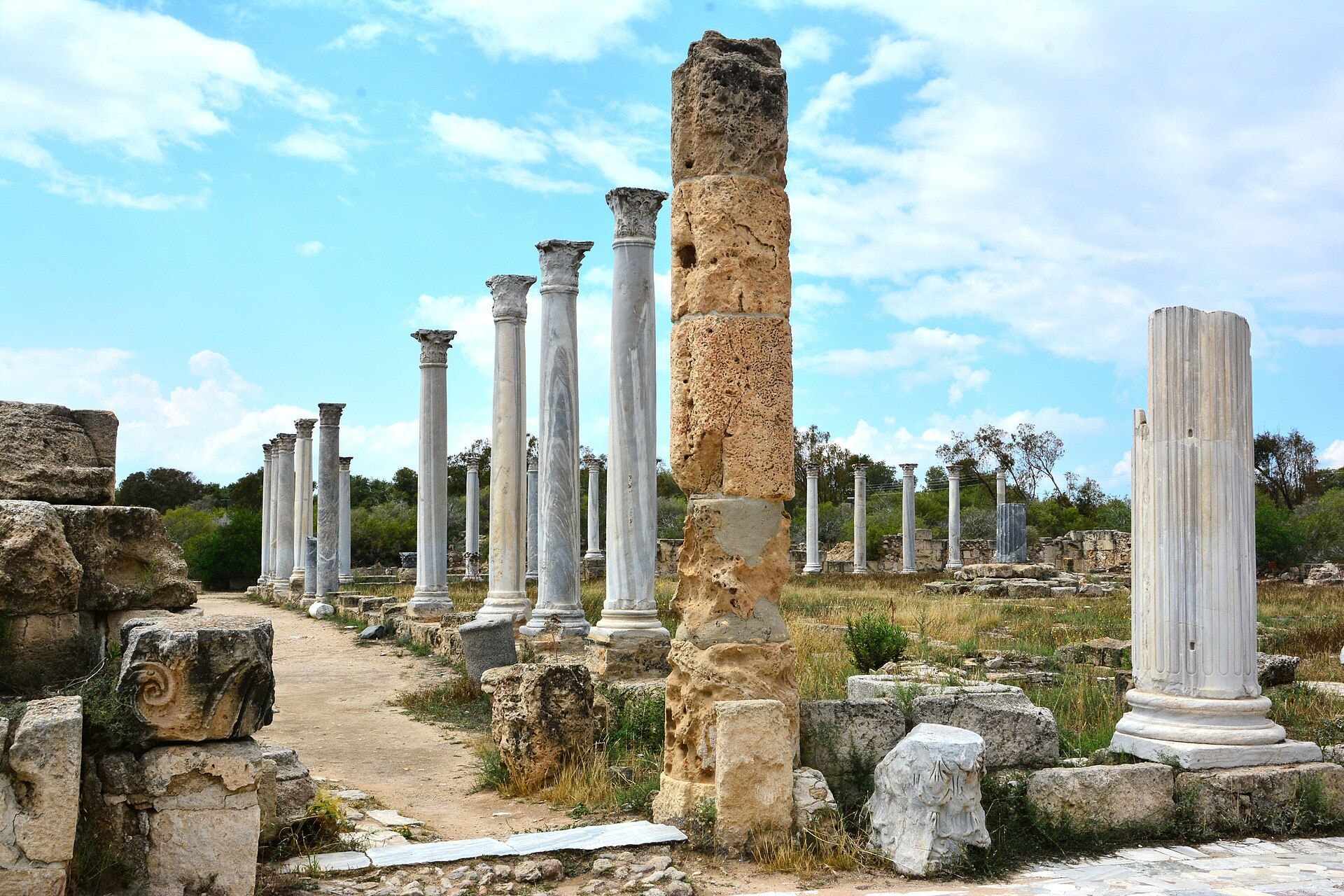
A few kilometres north of Famagusta lies the island's largest ancient site. For centuries Salamis was the most important city on Cyprus, and its ruins stretch across several square kilometres. The most striking part is the gymnasium, with its colonnade still standing around the exercise ground; next to it are the Roman baths with remnants of underfloor heating and mosaics, and a short walk further on the theatre, which seated close to five thousand. A series of earthquakes in the 4th century destroyed the city, and what was left was gradually buried by sand blown in from the coastal dunes. That sand preserved the place for centuries - which is precisely why so much survives. Allow at least two hours and bring a hat; there is very little shade.
Byzantium and the beginnings of Christianity
Cyprus is among the oldest Christian territories anywhere. According to the Acts of the Apostles, Paul and Barnabas - the latter a native of the island - preached here around AD 45, so the faith arrived practically within the first generation. Near Salamis stands the monastery of Saint Barnabas, built where the apostle's tomb was said to have been found; that discovery helped the Cypriot church win independence from the patriarchate of Antioch in the 5th century. Today the monastery houses an icon museum and an archaeological collection. From the Byzantine centuries there also survive small churches with mosaics and wall paintings scattered through the foothill villages.
Three castles above the coast
Three fortresses stand in the Kyrenia mountains: Saint Hilarion, Buffavento and Kantara. They were built in the Byzantine period as watchposts against raids from the sea, and placed so that each could see the next - a fire signal could be passed along the whole ridge to its far end within minutes. Under the Lusignans, the French dynasty that ruled the island from the late 12th century, they were rebuilt as proper castles with palace wings and summer apartments. Saint Hilarion is the best preserved and the easiest to reach; Buffavento demands a steep climb rewarded with views over both sides of the range; Kantara guards the eastern end. Saint Hilarion is said to have inspired Walt Disney's Sleeping Beauty castle - there is no evidence for it, but looking up at those towers you can see why the story stuck.
Bellapais: Gothic among the olive trees
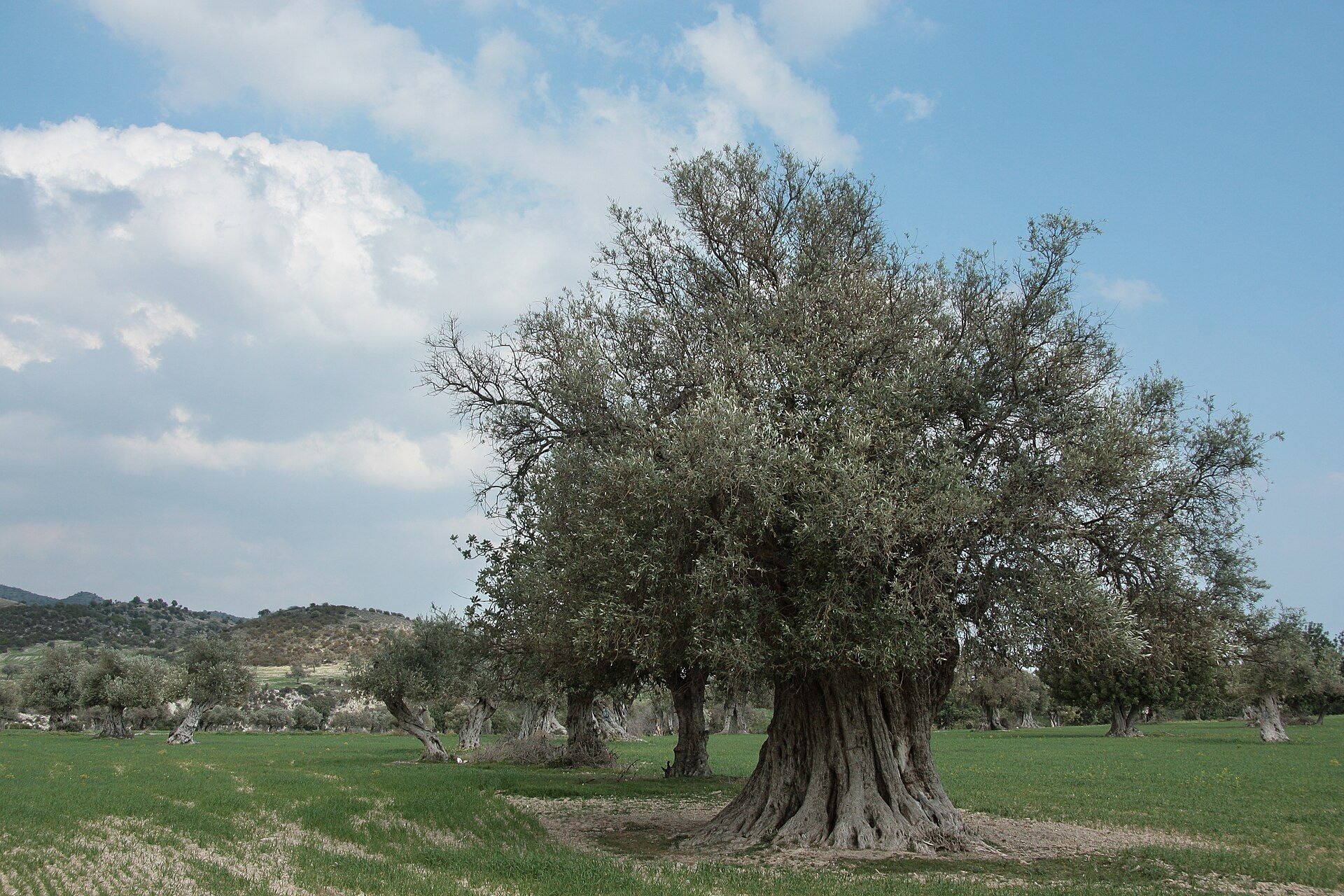
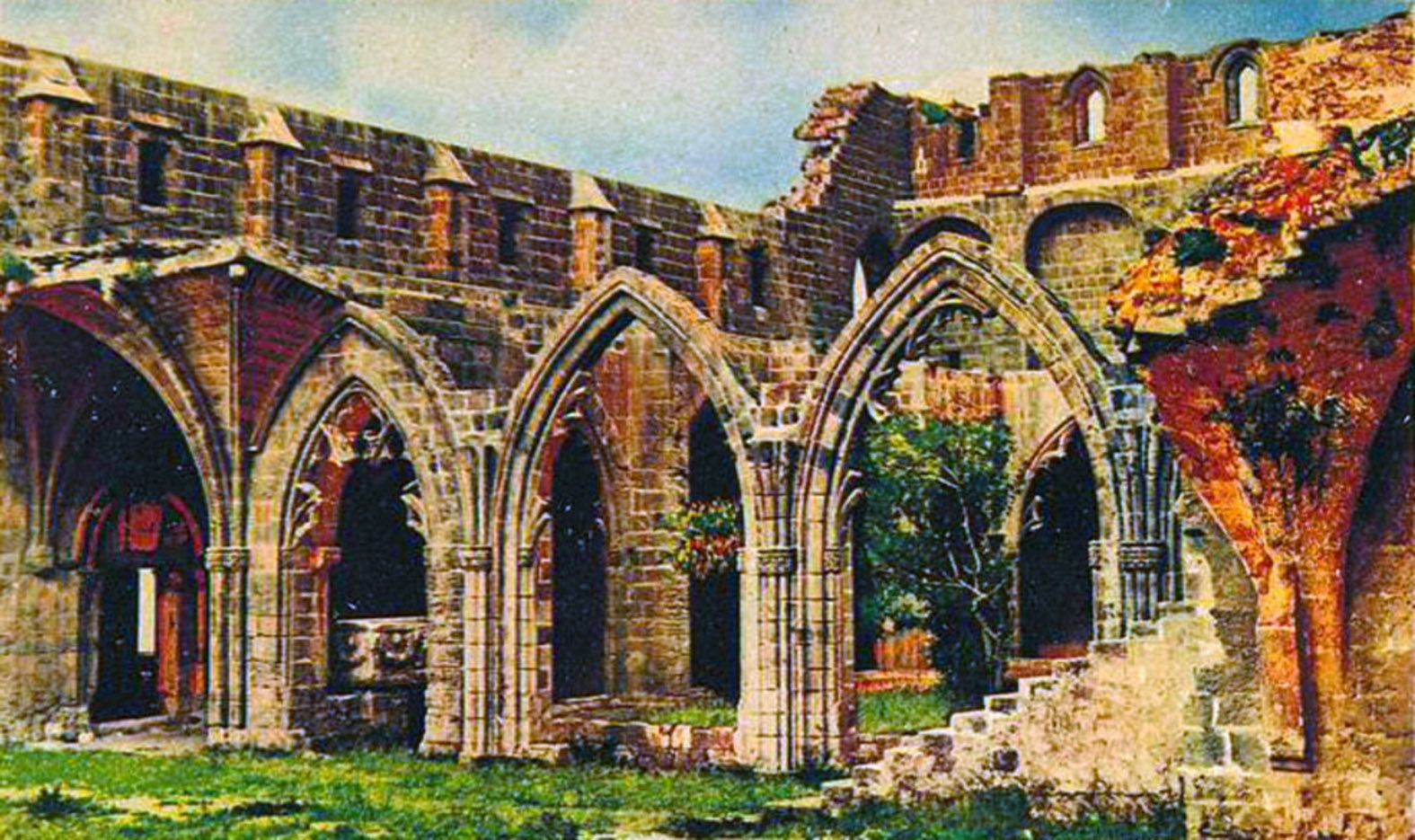
Above Kyrenia stands Bellapais Abbey, founded in the 13th century by Premonstratensian canons. It is one of the finest Gothic monuments in the eastern Mediterranean - pointed arches, a cloister around a cypress-shaded courtyard, and a refectory whose windows look down on the sea three hundred metres below. Even in ruin it feels like a piece of northern Europe that ended up among the olive trees by mistake. In the village below, the British writer Lawrence Durrell lived in the 1950s and wrote Bitter Lemons here; locals will still point out his house and the tree under which the villagers used to gather.
Famagusta behind the walls
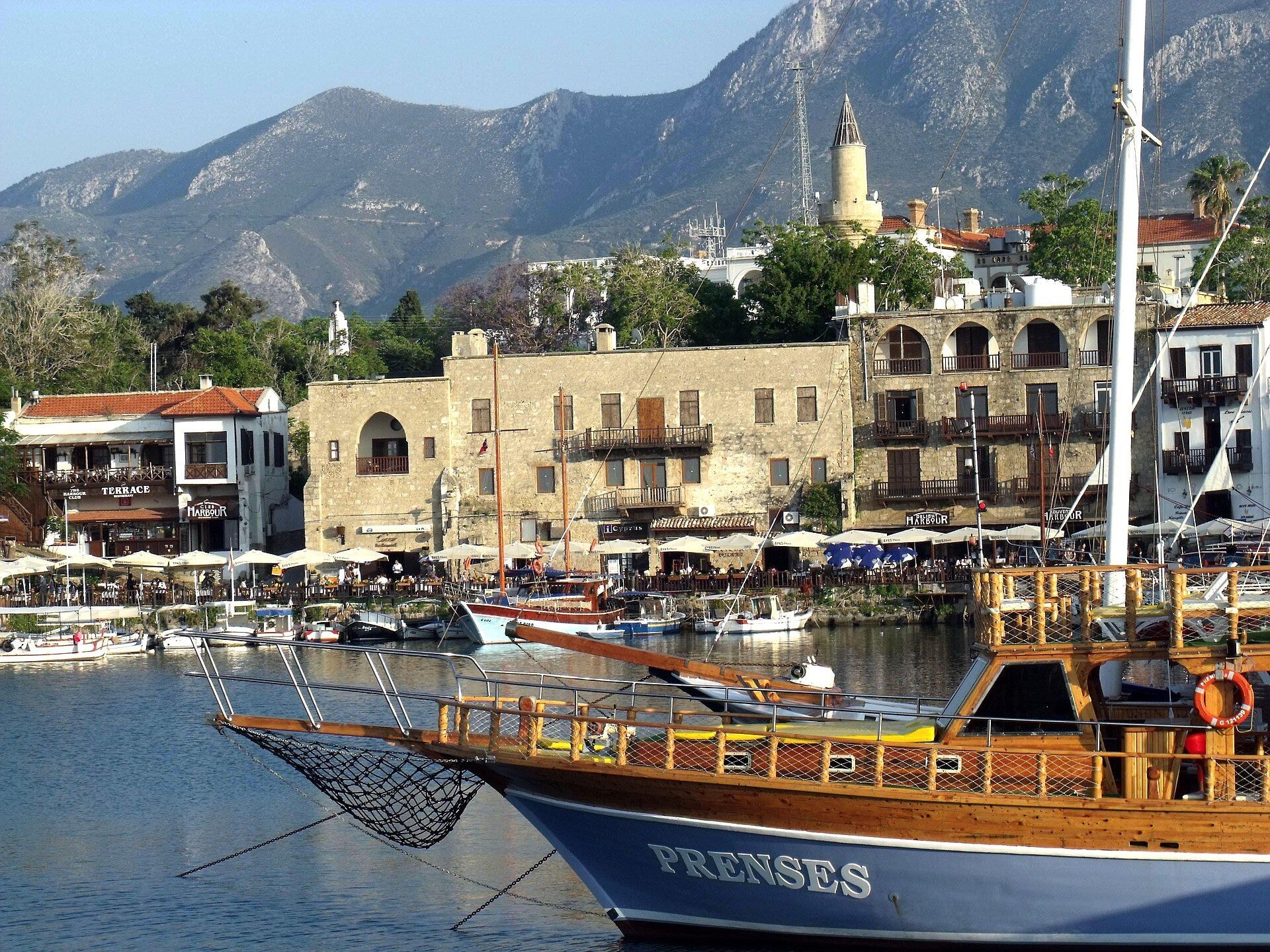
The old town of Famagusta is ringed by massive Venetian walls from the 16th century - fifteen metres thick in places, with bastions already designed against artillery. They were finished just in time to hold off the Ottoman siege, which lasted ten months and ended in August 1571. Inside stand churches converted into mosques, among them the cathedral of Saint Nicholas, today the Lala Mustafa Pasha Mosque: a Gothic facade that could be lifted from a French town, with a minaret added beside it. On the walls by the harbour rises Othello's Tower - Shakespeare set his play in a port in Cyprus, and Famagusta has claimed the connection ever since.
The Ottoman and British periods
After 1571 the island belonged to the Ottoman Empire for three centuries. In 1878 Britain took over its administration under an agreement with Istanbul and made it a Crown colony in 1925; driving on the left, parts of the legal system and many of the schools date from that time. Cyprus gained independence in 1960, and after the events of 1974 the island was divided into a northern and a southern part, a division that continues today. For a visitor this means two administrations and crossing points that can be passed with a passport. If you are planning a trip north and want to see not just the monuments but also how people live here now, CyprusGlobal will gladly help you with the route and the timing.