Where the sand is, where the rocks are, where turtles hatch and where to go even in September — a guide to the island's coast.
The coast of North Cyprus runs for roughly three hundred kilometres and covers three entirely different worlds: long sandy beaches in the east, rocky coves beneath the mountains in the north, and the empty, almost untouched Karpaz on the tip of the island. In a single day you can move from the concrete jetty of a beach club to a dune where you will meet nobody at all. Which stretch suits you depends on what you are looking for.
Long Beach at Iskele - three kilometres of sand
The island's best-known beach lies on the east coast and stretches for more than three kilometres. The bottom is sand and shelves so gently that you have to wade twenty or thirty metres before the water reaches your waist - which is exactly why families with small children come here. Beach clubs with sunbeds, showers and kitchens run along the strip, but between them there are long open stretches with nothing but sand, where nobody charges you for a lounger. The shallows have a second effect: the water warms up several weeks earlier than in the rocky coves in the north, so the season lasts from May to the end of October. Parking is free at most access points, though in July it pays to arrive before eleven if you want a spot near the water.
Alagadi - the turtle beach
Twenty minutes east of Kyrenia lies Alagadi, a protected area and one of the most important nesting sites in the Mediterranean. Two species lay their eggs here: loggerhead turtles and the rarer green turtles. From May to September part of the beach is therefore closed from sunset to sunrise, and the nests are marked and guarded by volunteers from the local research camp. During the day people swim here as normal, you just need to follow a few rules: stay off the marked squares, do not push a parasol into the sand outside the designated zone, and in the evening never shine a torch or a phone at the beach - light disorientates the hatchlings. If you catch the right evening, the volunteers will let you watch a hatching from a sensible distance as the young turtles scramble across the sand towards the sea.
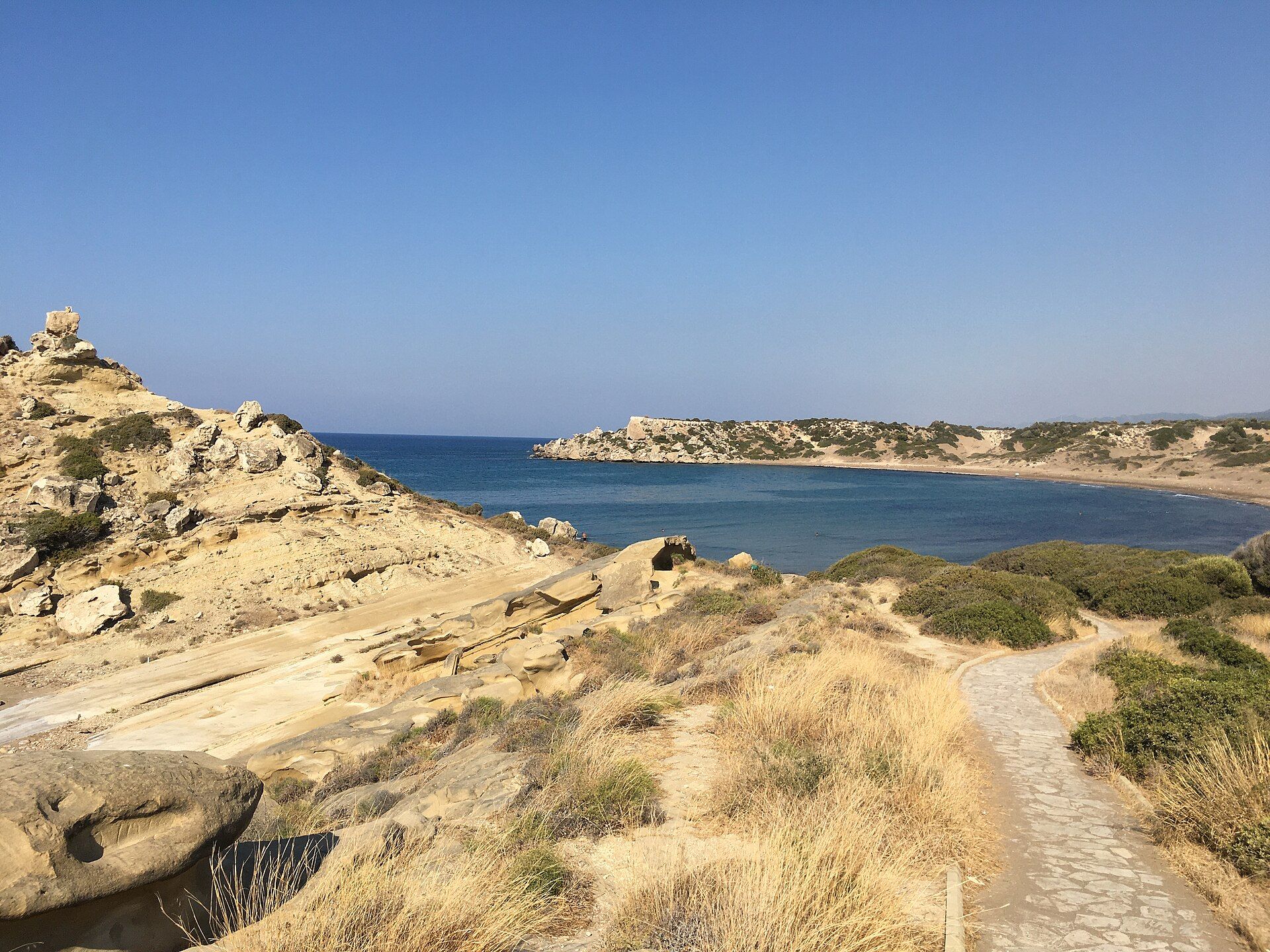
Golden Beach on the Karpaz
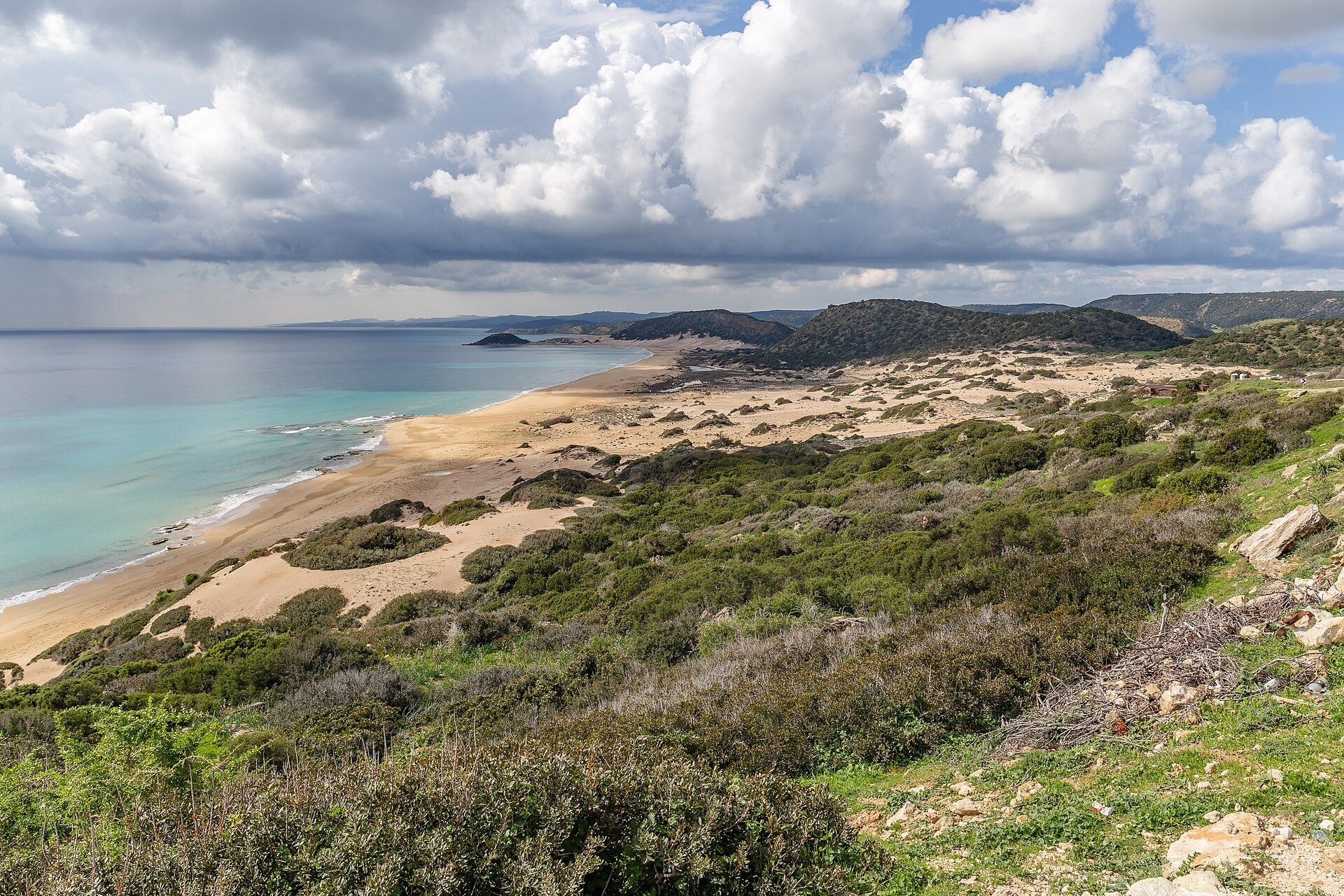
Several kilometres of golden sand stretch across the tip of the peninsula, blown by the wind into dunes a few metres high. The last section of road is unsurfaced - an ordinary car will manage it slowly and carefully, but not after rain. That road is precisely why the beach stays empty even in August. There is no hotel zone and no shop here, only a handful of wooden bungalows and a simple snack bar that may well be shut. Bring water for the whole day, food and something for shade, and head back before dusk, because the dirt track is unpleasant to drive in the dark.
The beaches around Kyrenia - rocky coves below the range
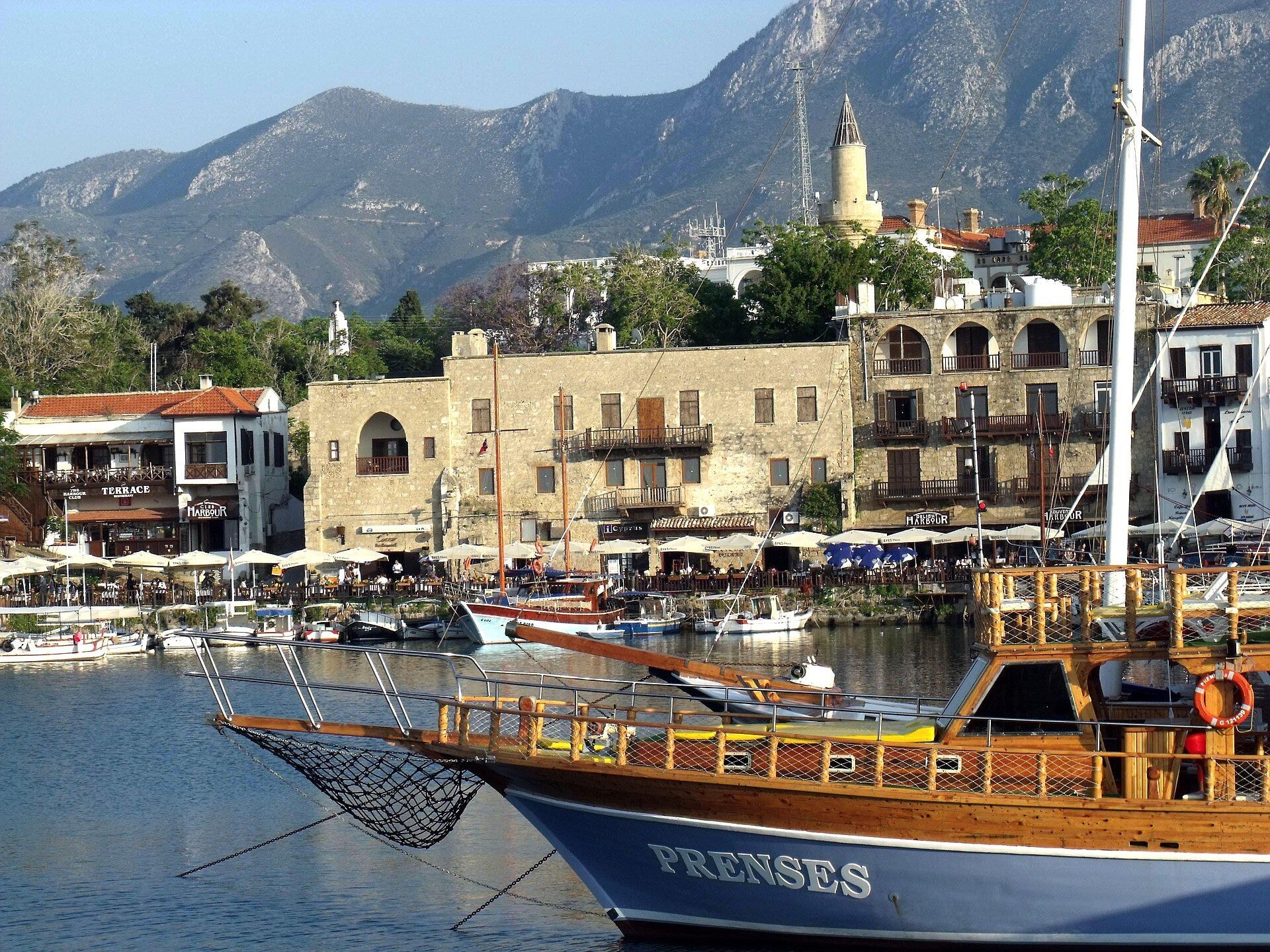
In the north the Kyrenia range drops almost straight into the sea and the coastline is broken up: short coves between rocky headlands, often with a stony bottom. The best known are Escape Beach and Acapulco west of the town - both have a strip of sand, sunbeds and a kitchen, and both are full in summer. The smaller coves between them stay almost empty, but it is worth packing water shoes for the stones. The reward is clear water: this is the best snorkelling on the island, and several diving centres operate nearby. The water in these coves warms up more slowly than in the east, but it stays cooler and fresher at the height of the season.
Bafra and the east coast
Between Famagusta and the Karpaz lies Bafra, a stretch set aside for large hotels. Resorts with their own beaches, water parks and casinos stand here, and a wide band of sand several kilometres long runs down to the sea. The beaches are groomed, with loungers, showers and lifeguards, but most of them belong to the hotels and there is an entrance fee if you are not staying. Between the resorts and further east you can still find free sand - with no facilities whatsoever, but also with no people.
Practical things
Private beaches charge either an entrance fee or a minimum spend, and a lounger with a parasol is usually included. On the open stretches you pay nothing, but you also find nothing - and shade is a rarity on the Cypriot coast, so your own parasol is the most useful thing in the boot. The sea is clean and clear, and jellyfish are practically unknown here; sea urchins in the rocky coves are the thing to watch for instead. The winds on the east coast are gentler than in the north, so when Kyrenia is blowing and throwing up waves, Long Beach is usually calm. One more detail: drinking water is bought in bottles or in large refill barrels - nobody drinks from the tap.
When to go
The sea is around 21 �C in May, 25 in June, 27 to 29 in July and August, and stays above 27 in September. In October it falls slowly and only reaches twenty-two degrees at the end of the month - so the swimming season is almost twice as long as in central Europe. July and August are the busiest, when the air goes past thirty-five degrees and people come to the beach early in the morning or after four in the afternoon. The most pleasant months are June, September and the first half of October: the water holds its warmth, the days are still long and the beaches empty out. If you are choosing a stretch of coast for an apartment or a house, we at CyprusGlobal will gladly show you the individual sections on the ground.